The Crowd Isn't Always Wrong: When Fading the Public Burns Your Bankroll
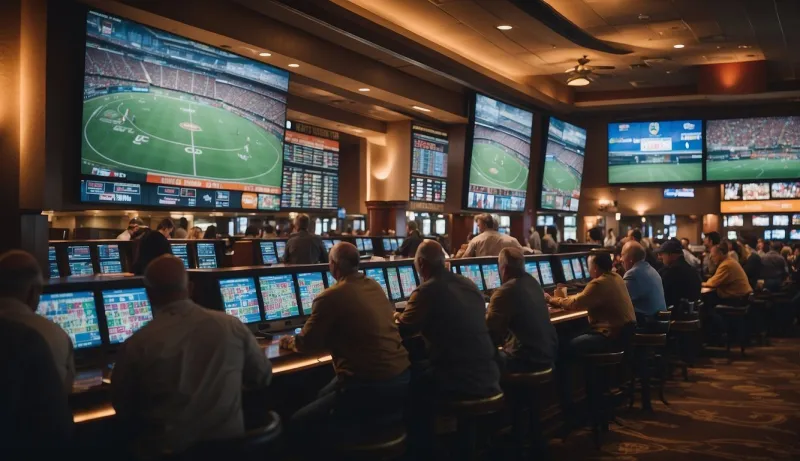
Photo: sportsbook betting app crowd watching football game bar, via koala.sh
Every bettor has heard it a thousand times by now: the public loses, so bet the other side. Fade the popular team, take the points nobody wants, and collect. It's tidy. It's satisfying. It makes you feel like the smartest person in your group chat.
It's also incomplete — and if you apply it without thinking, it will quietly drain your account.
The truth is that contrarian betting is a tool, not a religion. And like any tool, it works great in some situations and terribly in others. Let's break down when fading the public actually pays, and when you're just paying a premium to be contrarian.
Where the "Fade the Public" Myth Came From
The logic isn't crazy. Sportsbooks shade their lines toward popular teams because casual bettors bet with their hearts. Cowboys on Sunday Night Football? The line is probably a half-point worse than it should be for Dallas backers, because the books know the public will hammer Dallas regardless.
So the theory goes: if the public inflates one side, the other side holds value. Take the team nobody likes, get the better number, win over the long haul.
The problem is that this logic was built on a snapshot of the betting market from twenty years ago. Today's lines are sharper, the books have better data, and the public isn't always the liability it used to be.
When the Public Actually Wins
Here's the uncomfortable data point that contrarian evangelists don't like to talk about: in certain high-profile markets, the popular side covers at a perfectly respectable rate.
Prime-time divisional games. Division rivals know each other. The underdog in a heated rivalry — think Bears-Packers, Giants-Cowboys, Ravens-Steelers — often plays up to the moment regardless of the spread. The public loves these games, and the public isn't wrong to love them. Blowouts are rarer in divisional matchups, which means the underdog catching points has a real shot even when nobody in the sharpest corner of the market gives them a chance.
Big favorites in nationally televised spots. The best teams in the league don't suddenly forget how to play football because the cameras are on. Elite home favorites in showcase games — the Chiefs laying a modest number against a bad team on Sunday night — have historically covered at rates that would make a blind fade look foolish. The public bets the best team, and sometimes the best team is simply the right bet.
Overs in marquee offensive matchups. Casual bettors love scoring, and every so often the crowd's instinct is correct. When two high-powered offenses meet in good weather with playoff implications, the public's over bias occasionally lines up with genuine value instead of fighting it.
The Real Question: Why Is the Money on That Side?
The distinguishing factor isn't whether the public is on a team — it's why.
If 75% of tickets are on the Chiefs because they're America's team and Taylor Swift is at the game, that's bias, and the other side might hold value. But if 70% of tickets are on the Chiefs because they're the healthiest, best-coached team in football facing a quarterback on a short week, that's information. Fading information is how bettors go broke with a smirk on their face.
A few questions to ask before you fade anyone:
- Is the line moving toward the public side or away from it? If the line shifts in the direction the money is flowing, the books aren't afraid of the popular side — that's a signal it might be the right side.
- Are the tickets lopsided but the money even? Big splits between ticket count and actual dollars wagered often mean sharp money is quietly on the popular side.
- Is this a spot where public bias is real? Small-market underdogs, big-market favorites, prime-time spots — bias exists, but it's not everywhere.
How to Build a Smarter Contrarian Approach
You don't have to abandon contrarian betting. You just have to stop treating it as automatic.
Fade bias, not popularity. Look for cases where a team's brand — not its performance — is driving the line. A legendary franchise on a down year getting respect it hasn't earned? That's a fade candidate.
Respect the sharp-consensus spots. When public and sharp money align on the same side, take the side and move on. There's no edge in being different for its own sake.
Track your own results by market type. Most bettors never actually check whether their fades are profitable in prime-time games versus early-window games. Split your record by scenario. The answer might surprise you — and it's usually more useful than any hot take on social media.
The Bottom Line
"The public always loses" is a slogan, not a strategy. The public loses on balance over a full season because it overbets certain spots, overreacts to last week's results, and chases narratives. But on any given Sunday — especially in the highest-profile games with the most attention — the popular side can be, and often is, the correct one.
Contrarian betting works when you're fading a mistake. It fails when you're fading a fact. Learn the difference, check the line movement, and stop handing back your edge just to feel like the smartest contrarian in the room.
The crowd is wrong a lot. Just not always. And the nights it's right are exactly the nights the blind faders get buried.