Read the Fine Print Before You Read the Line: A Bettor's Field Guide to the NFL Injury Report
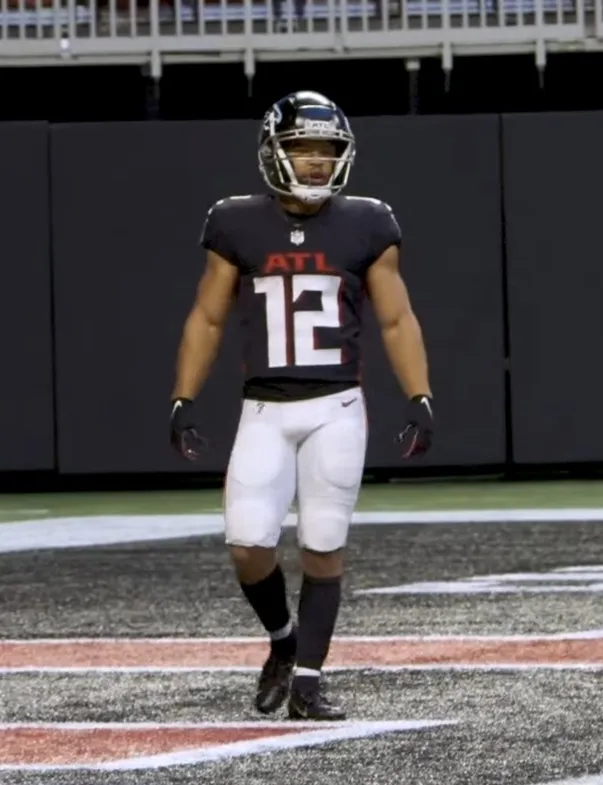
Photo: https://m.youtube.com/@AtlantaFalcons, CC BY 3.0, via Wikimedia Commons
Every Wednesday during the NFL season, 32 teams file a document that moves more money than most hedge fund press releases. And almost nobody reads it properly.
We're talking about the injury report — that tidy little list of DNP, limited participation, and full participation tags that scrolls across the bottom of your screen around 4 PM Eastern. Most bettors glance at it, see their star receiver listed as questionable, and either panic-bet the under or fade the team entirely. That's exactly the wrong move, and the sharps have been quietly profiting off that reflex for years.
The Report Isn't Medicine. It's Strategy.
Here's the uncomfortable truth: the injury report is a compliance document, not a medical one. Teams are required by league policy to disclose participation levels honestly, but nothing stops them from being creative about what gets disclosed and how it gets framed.
A veteran linebacker with a nagging ankle might practice fully all week and still sit Sunday. A rookie corner might miss every session with a 'hamstring' that's really a contract dispute wearing a bandage. The designation tells you a player didn't practice. It tells you nothing about why, or whether he'll play.
This is the gamesmanship layer, and it's been part of the league forever. Bill Belichick turned the injury report into performance art during his Patriots years, listing Tom Brady with a shoulder designation roughly every week for a decade. Brady, for the record, was rarely hurt. The point wasn't accuracy — it was noise.
Decoding the Three Magic Words
The NFL's official game status designations follow a rough hierarchy, and each one carries different information value:
Questionable — This is the catch-all, and it's where gamesmanship lives. Historically, a coin-flip tag. But here's a pattern worth tracking: star players listed as questionable on a limited practice Friday tend to play at a high clip. Stars listed as questionable after missing all week? That's when you sweat.
Doubtful — This one is nearly honest. If a team labels a player doubtful, he's almost certainly not playing, and the team knows it. Doubtful is what coaches use when they don't want to make the IR move yet. Treat it as 'out' and move on.
Out — The only tag you can fully trust. By the time a player is ruled out, the decision's been made and the lineup math is done.
The real intel isn't in the game status — it's in the practice participation trend. A player who goes DNP Wednesday, limited Thursday, full Friday is trending toward playing. Full Wednesday, limited Thursday, DNP Friday is a player whose week got worse. Direction matters more than any single data point.
The Phantom Injury Checklist
So how do you spot a designation that's more theater than medicine? Run this five-point checklist before you let any tag change your bet:
-
Check the timing. A designation that appears suddenly on Friday — after a clean Wednesday and Thursday — is either a genuine setback or a coach protecting leverage. Either way, it's information. A tag that's existed since Week 4 with no change? That's wallpaper. Ignore it.
-
**Watch the position. Coaches manipulate certain positions strategically. Quarterback designations are almost always real — nobody games with their most important player. Designations on special teamers and backup linemen? Often procedural filler.
-
Cross-reference the beat reporters. Local beat writers who cover the team daily often have better injury intel than the report itself. If three beat writers say the running back looked fine in the open portion of practice, the limited tag means less.
-
**Track the line movement. If a star gets downgraded and the line doesn't move, the market already knew. If the line jumps a full point on a questionable tag, something real leaked. The closing line is the sharpest injury report in existence.
-
Note the opponent's schedule. Teams playing a Thursday game have a compressed week and vaguer designations. Sunday night and Monday games give teams an extra day of fog to operate in.
How the Books Price the Fog
Here's the part casual bettors miss: oddsmakers aren't reacting to the injury report — they're reacting to what the injury report will become. Lines are set with the expectation that questionable stars play and doubtful players sit. By the time the report drops, most of its information is already baked in.
The edge, such as it is, comes from the discrepancies. When a designation contradicts the reporting, the video, or the market, that's where value hides. Sharp bettors don't ask 'is he playing?' They ask 'what does the market believe, and is it wrong?'
That's also why fading the panic is a real strategy. Every Sunday, a star gets ruled questionable, half of Twitter declares the season over, and the total drops two points. Then the star plays 80% of snaps and covers the over by himself. The report caused the overreaction. The box score collected the payment.
Your Wednesday Routine
If you want to make the injury report work for you instead of against you, build the habit: read it within an hour of release, check participation trends rather than statuses, cross-reference beat reporting, and then — this is the hard part — do nothing until you see how the market responds.
The injury report will never hand you a lock. It's a fog machine operated by 32 teams with every incentive to obscure. But fog, read carefully, has a shape. And the bettor who learns to read that shape is no longer betting the same Wednesday document everyone else is.
At ScoreCast, we track these designation trends all season long — because predicting the game means knowing which 53-man roster is actually showing up on Sunday.